Chemical Vapor Deposition (CVD)
1. Introduction to CVD
Chemical Vapor Deposition (CVD) is a versatile technique for producing high-quality, high-performance thin films and nanomaterials by depositing a solid material from vapor-phase precursors onto a substrate via chemical reactions.
Core Principle: Volatile precursor(s) → Transport to substrate → Surface chemical reaction → Solid deposit + Volatile by-products
2. Fundamental Process Steps
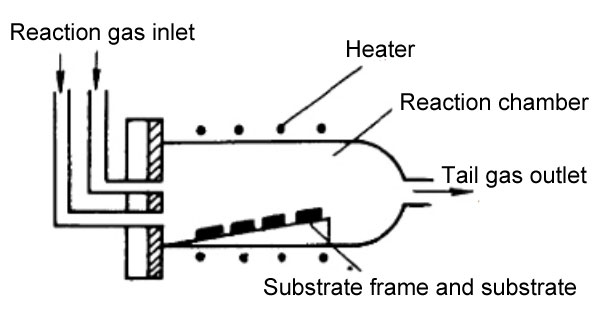
2.1 The CVD Process Flow
Chamber Wall
┌─────────────────────────────────────────────┐
│ │
│ 1. Precursor Transport (Gas Phase) │
│ ↓ │
│ 2. Diffusion through Boundary Layer │
│ ↓ │
│ 3. Adsorption on Substrate Surface │
│ ↓ │
│ 4. Surface Diffusion & Reaction │
│ ↓ │
│ 5. Nucleation & Film Growth │
│ ↓ │
│ 6. Desorption of By-products │
│ ↓ │
│ 7. Diffusion of By-products away │
│ │
│ ┌──────────────┐ │
│ │ Substrate │ ← Heated stage │
│ │ (Heated) │ │
│ └──────────────┘ │
└─────────────────────────────────────────────┘
2.2 Detailed Steps
3. CVD Process Windows
3.1 Growth Rate vs. Temperature
Growth Rate (log scale)
↑
│ Region I Region II Region III
│ (Reaction- (Mass- (Thermodynamic
│ Limited) Transport- Limitations)
│ Limited)
│ ┌──────┐
│ │ │◄──── Flat region (ideal)
│ ┌────┘ │
│ │ │
│ ┌──┘ │
│ │ │
│ │ └──────────
│ │ └─────────
└─┴──────────────────────────────────────► 1/T (K⁻¹)
↓T↓ ↑T↑
3.2 Boundary Layer Thickness (δ)
Where:
- μ = gas viscosity
- ρ = gas density
- v = gas flow velocity
Thinner boundary layer → faster mass transport → higher growth rate in region II
4. CVD Types and Variants
4.1 By Pressure Regime